
Dr. Jason Smith, associate professor of American history at Southern Connecticut State University, recently appeared on WTNH News 8’s Nyberg to discuss a student-led project exploring how Americans commemorate major national milestones.
As the nation approaches its 250th anniversary, Smith and his students are collecting what they call “America 250 schlock” — everyday, mass-produced items that reflect how history shows up in popular culture.
“As we think about our past and this anniversary… we can resurrect this stuff from 1976, place it next to stuff from 2026, and see how things change — and how they stay the same,” Smith said.
Inspired by a 1976 effort by historian Jesse Lemisch — whose students collected bicentennial memorabilia now housed at Yale’s Beinecke Library — Smith’s class is building a modern-day version of that archive. Students are collecting items ranging from clothing and cans to novelty goods found in everyday stores, alongside digital-era artifacts.
“These are things that might seem trivial, but actually… tell us a whole lot,” Smith said.
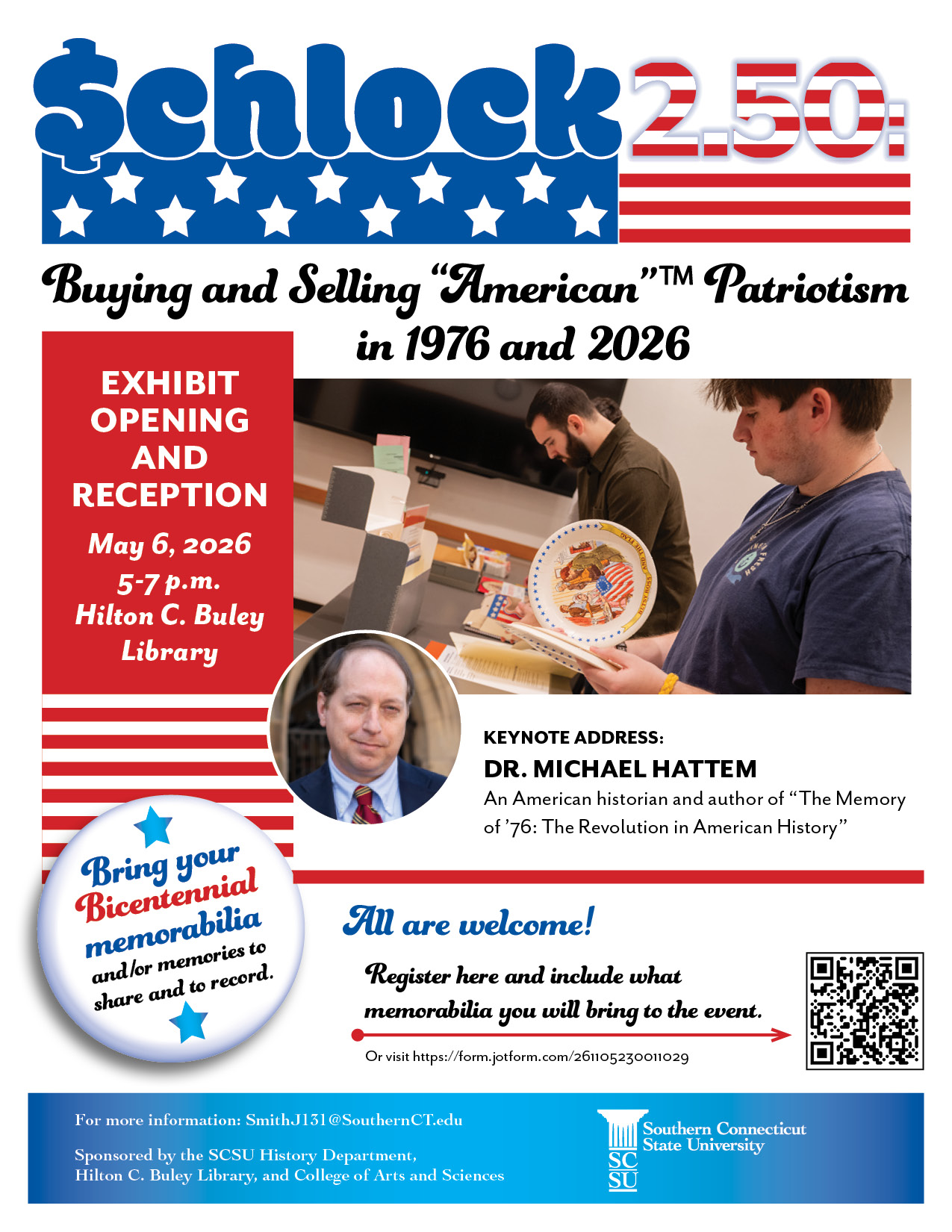
The project will culminate in a public exhibit titled “Schlock 2.50: Buying and Selling ‘American’ Patriotism in 1976 and 2026,” opening Wednesday, May 6, from 5 to 7 p.m. at Southern’s Hilton C. Buley Library. The exhibit will feature side-by-side comparisons of bicentennial-era items and their modern counterparts, highlighting shifts in how Americans consume and express national identity.
The opening reception will include a keynote address by Dr. Michael Hattem, an American historian and author of The Memory of ’76: The Revolution in American History.
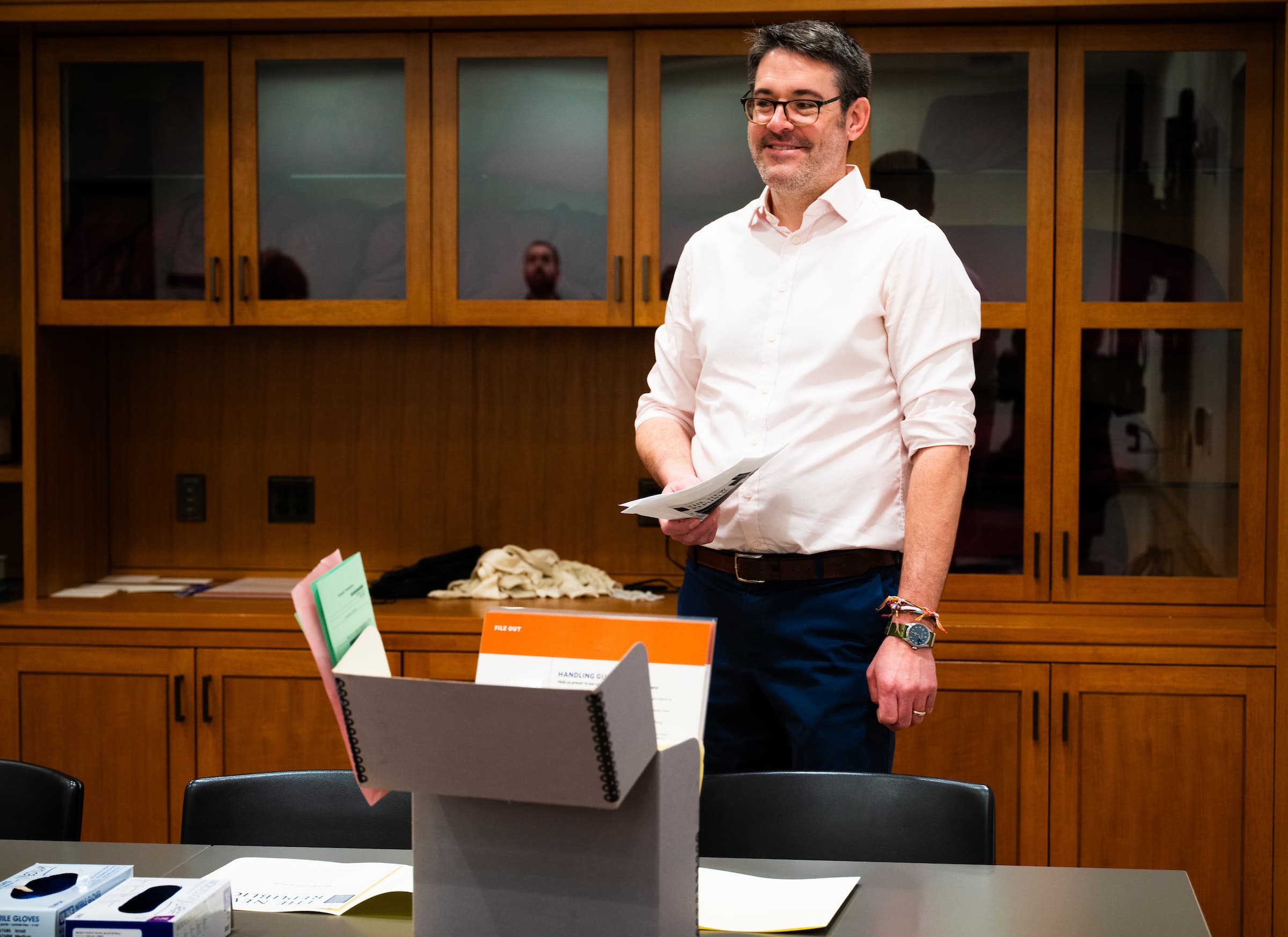
Smith said the exhibit will also incorporate community contributions, with organizers encouraging the public to bring bicentennial memorabilia or memories to share and record.
“We’re especially interested in crowdsourcing schlock… the more people can let us know what’s out there, the better,” he said.
The exhibit also reflects broader cultural changes in how history is experienced.
“What was material schlock in the 1970s has largely become digital schlock in 2026… and that says a lot about the way we consume ideas, objects, and history,” Smith said.
For Smith, the hands-on nature of the project remains essential.
“The tangible is really important… I love to have students get in close physical proximity to these things,” he said.
The event is free and open to the public. For more information or to participate, visitors can register online and indicate what memorabilia they plan to bring.