

Why does love make people feel euphoric, obsessive, and sometimes a little irrational? According to researchers at Southern Connecticut State University, the answer lies in the brain.
Dr. Kelly Bordner, professor of psychology, and Dr. Rachel Jeffrey, assistant professor of biology — co-directors of Southern’s behavioral neuroscience program — explained how falling in love activates the brain’s reward system.
A surge of dopamine fuels pleasure and motivation, norepinephrine drives physical sensations like a racing heart and butterflies, and oxytocin strengthens bonding, trust, and emotional security. At the same time, drops in serotonin can contribute to the intense focus often felt during early infatuation.
“Together, these chemicals create the mix of excitement, focus, and safety that we interpret as love,” Bordner and Jeffrey explain.
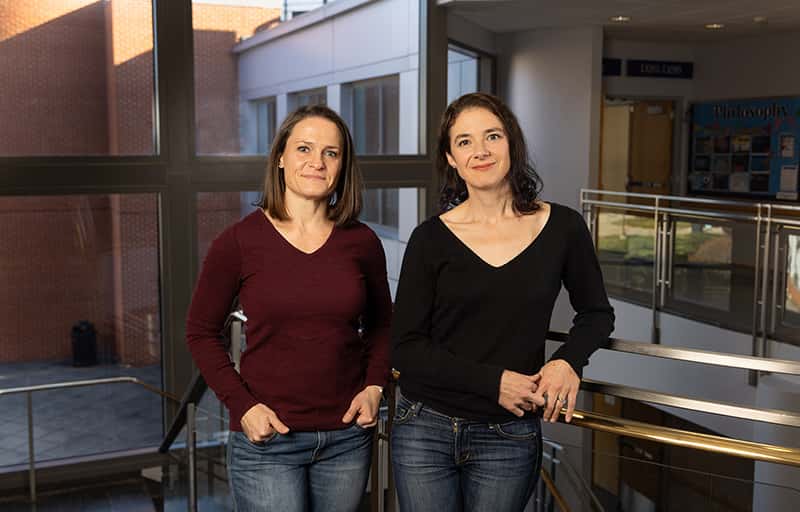
Their insights reflect the interdisciplinary focus of Southern’s B.S. in Behavioral Neuroscience program, which launched in 2025 to give students a deeper understanding of how biology and psychology intersect to shape human behavior. The program combines lab research, brain anatomy, cognition, and mental health studies, preparing students for careers in research, health care, biotechnology, and related fields.
“Understanding the brain’s role in love doesn’t make it less meaningful. Instead, it reminds us that love is both a deeply emotional experience and a finely tuned biological process, one that has evolved to connect us, bond us, and keep us coming back for more.”
Read the full story in CT Insider: “Why people fall in love — and lose their heads, according to science”